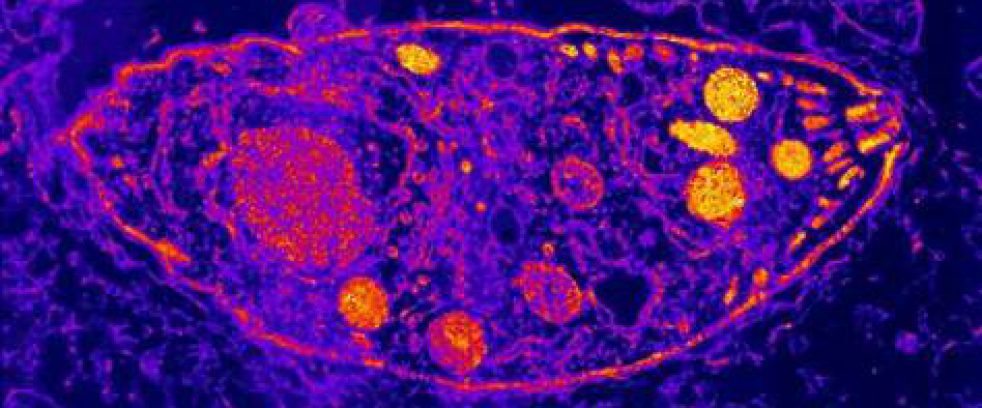
Before T. gondii can infect a human being, there is a complex set of processes that occur first. Transmission begins in the intestines of domestic cats, felids (cat family) being the only species in which the T. gondii parasite can sexually reproduce and grow. The way that cats contract T. gondii, similarly to humans, is typically by consuming raw or under-cooked meat products, which can include eating infected rodents (3). Once a cat is infected, there are two ways for it to transmit infection which are through tissue cysts and passing fecal oocysts. After the cat has eaten the contaminated substance, it starts to shed the oocysts in its feces signaling the immune system to attack the parasite and prevent it from further reproducing immediately. This immune system attack will cause the cat to cease shedding within two weeks of infection. The fecal oocysts will remain non-infectious for up to five days, but will go on to develop spores, called sporulation, after which time the feces can stay contaminated with live spores for up to 18 months. These spores when ingested or touched result in infection by T. gondii. These spores can be passed on both directly and indirectly, found in contaminated water, livestock, soil, and unwashed produce (3).
Transmission of T. gondii can also occur from an infected mother to fetus. Transplacental transmission can be caused by infection of the mother during pregnancy and can have serious health implications for the newborn including the development of Congenital Toxoplasmosis. Infection can occur through all of the possible ways listed above (1).
So, how did this meat become ridden with cysts in the first place? From poor handling of meat products contaminated with fecal matter or the consumption of the meat of livestock that has eaten spores – transmission is very cyclic! Follow the diagram below to trace a simplified pathway between infected cysts and humans.
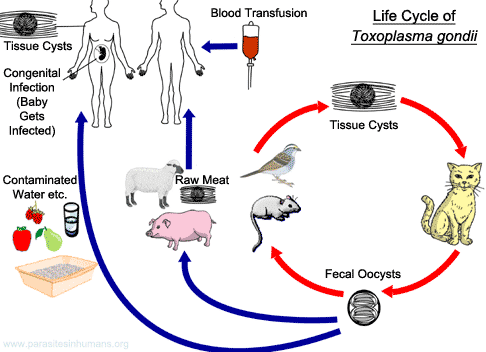
The life cycle of T. gondii showing transmission patterns between humans, cats, and other intermediates. Transmission begins with cat (on right).
Sources:
1. Lopez, Adriana. “Preventing Congenital Toxoplasmosis.” Centers for Disease Control and Prevention. Centers for Disease Control and Prevention, 2 May 2001. Web. 13 Dec. 2016.
2.”Toxoplasmosis.” Toxoplasmosis. Mayoclinic, 24 July 2014. Web. 13 Dec. 2016.
3. Toxoplasmosis Is A Disease Caused By A Microscopic Parasite, and Called. “Cats and Pregnant Women.” Cats and Pregnant Women – Toxoplasmosis (n.d.): n. 12. The Cat Group. Cats Protection Veterinary Guide 20. Web. 13 Dec. 2016.
 Toxoplas-what?